
Can solar energy and farming share the same land? These Wisconsin researchers think so
July 2, 2026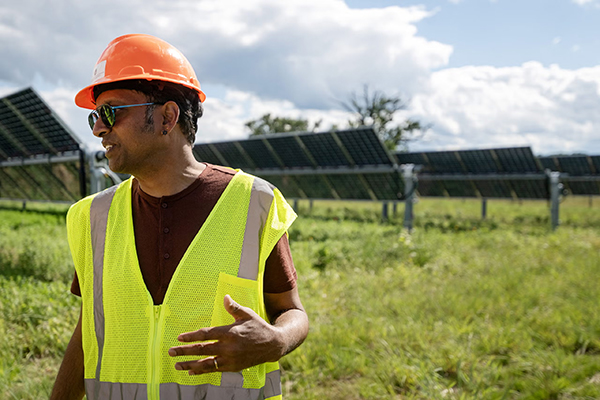
Photo: Angela Major/WPR
“As solar power makes up a bigger piece of our electricity puzzle, there’s a worry about a trade-off, especially in rural areas: If we build more solar farms, are we losing land for crops?
But University of Wisconsin-Madison scientists are asking the question: Why can’t we have both?
‘Agrivoltaics’ is a concept that brings together solar panels and food production in the same field, in a way that allows the two to work together. For example, some crops and livestock can benefit from the partial shade the panels provide.
Researchers are working to figure out the best ways to put agrivoltaics into action, and carefully measuring things like water use, soil carbon levels and wind patterns.
‘Wisconsin Today’ visited the UW-Madison Kegonsa Research Campus solar array just west of Lake Kegonsa.
There are 5,424 solar panels on the nearly 17-acre site. The panels are arranged in a variety of ways to help measure things like sunlight, crop growth and possible animal grazing.
‘What we’re talking about here are utility-grade solar arrays that need to provide power for the grid, so they need to be relatively large,’ Ankur Desai, chair of the department of atmospheric and oceanic sciences at UW-Madison, told WPR”s ‘Wisconsin Today.’”
Read the full Wisconsin Public Radio article by Mackenzie Krumme and Rob Ferrett, July 1, 2026